Series / The Intellectual Selfie
The Intellectual Selfie We learned to curate our lives for the camera. Now we curate our minds for the feed. A ten-part series on what happens to writing, thinking and reputation when anyone can publish anything, and a machine can write it for them.
The parts 8 of 10 parts published
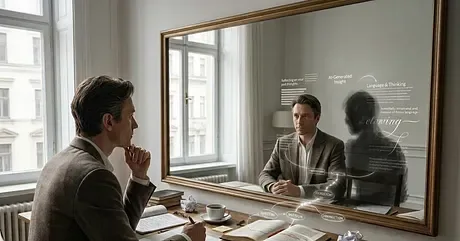
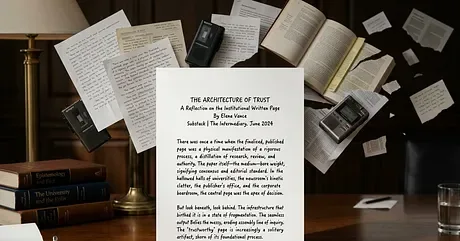
The photographed meal Instagram taught us to construct a public life from selected moments. The restaurant. The holiday. The concert. The hotel. But there may be another kind of profile emerging: the mind we want other people to see. An essay can become evidence in much the same way a photograph did. Look where I was becomes: Look at what I think. 5 min read 1/10 The mind becomes a profile The social selfie said: this is the life I want you to see. The intellectual selfie says: this is the mind I want you to see. This piece asks what happens when essays stop being only the result of thinking and also become part of a public profile that must be maintained. 6 min read 2/10 The old cost of a paragraph At first I publish because I have something to say. Then people begin expecting me to publish. Eventually there is a subtle reversal: I need something to say because I must publish. Has your writing or reading ever hit this pivot point? 6 min read 3/10 The article that had no before A good essay usually contains evidence that a mind was at work. A hesitation. An objection. A change of mind. A return to the opening image. A sentence like: I thought the problem was X. I no longer think that. AI can now reproduce all of those signals. So an article may contain an intellectual journey even when nobody actually travelled it. 5 min read 4/10 The spine Imagine two writers. One knows his subject deeply but writes poor English. AI helps him translate, organize and polish what he already knows. The other knows almost nothing about the subject and asks AI to produce a convincing essay for him. The first article may contain more machine-generated language than the second. So which author is more artificial? Maybe we are looking in the wrong place. 8 min read 5/10 The detector looking at itself AI writes the essay. AI disguises the essay. AI inspects the disguise. AI assigns a probability to whether AI was involved. …and all of them are looking at the exact wrong place: the sentences. We are counting words when what matters is intent. My article on why AI detectors are asking the wrong question. 7 min read 6/10 The institutions that believed the page A student submits a perfect essay. An employee presents a brilliant memo. A journalist publishes a polished article. AI makes one old assumption harder to trust: “does the page still prove the understanding, reporting or judgment behind it?” 10 min read 7/10 The abundance trap AI can make competent writing almost unlimited. That creates a strange problem for writers: the reader does not need another article. They need a reason to return to you. When words become abundant, judgment, experience, continuity and trust become scarce. And the reader still has the final vote: they can leave. 9 min read 8/10 Coming soon 9/10 Coming soon 10/10