Home / Essays
Single pieces, each complete on its own: what changes when artificial intelligence stops answering and starts acting, and wanderings through music, nature and the inner voice.
All essays 18 essays
AI & the Economy The Economy Beneath AI I asked readers to treat “The Sovereign Agentic Economy” as an open-source map: take a branch, challenge it, extend it, fork it. So I did the same. This is my first fork. I followed one question: “If AI stops merely answering and starts acting, where does the economic value move?” My answer changed as I followed it. 15 min read AI & the Economy The Sovereign Agentic Economy I am trying something different with this article. It is not a finished thesis. It is a working map of what may happen when AI moves from answering questions to actually acting in the economy. Models lead to agents. Agents lead to identity, payments and law. Law leads to sovereignty. Sovereignty leads to infrastructure and energy. And suddenly what looked like a software discussion starts looking like economics and geopolitics. So I am publishing the map unfinished. Take a section. Challenge it. Extend it. Fork it. “The Sovereign Agentic Economy” is meant to be written beyond the person who started it. Potentially by readers. 16 min read AI & the Economy The Limits of Foresight Imagine opening a newspaper in 1925 and seeing this headline: “Quantum Mechanics Is About to Reorganize Civilization. What Will This Do to Us?” The writer would have been spectacularly right. And probably wrong about almost everything that followed. They could perhaps imagine new machines and communications. But Instagram? Smartphones? Google Maps? TikTok? Generative AI? We may now be writing the same article about AI. Perhaps recognizing a technological revolution is much easier than predicting the civilization it eventually creates. 20 min read AI & the Economy And What Now? The Time for Choice And what now? Most countries cannot build their own chips, cloud, frontier AI models, satellite networks and digital platforms simultaneously. So they have choices to make. Rent the frontier. Regulate the systems they cannot build. Or specialize deeply enough that others need them too. 16 min read AI & the Economy Information Has a Peculiar Economic Property. Then Came AI. Information has a peculiar economic property: It can cost years and millions to create — and almost nothing to reproduce. That tension is one reason patents and intellectual property exist. AI changes the equation again. It can learn from what others created, reduce the cost of reproducing its functional value, and increasingly stand between producers and consumers when the consumer asks what to buy. We may be moving from an economy of persuasion toward something closer to algorithmic imposition. My new essay asks a simple question: If AI can learn from yesterday's ideas, help reproduce them, and eventually decide which ones reach the consumer — who pays for the next idea? 24 min read AI & the Economy The Agent Becomes the Bank A bank used to be a place where humans evaluated risk, approved loans, moved money and managed a balance sheet. Now imagine that AI performs all of those functions. It scores the borrower, prices the loan, allocates the capital, executes the payment, monitors repayment and manages liquidity. At what point is AI no longer simply working for the bank? At what point has the bank become software? 17 min read AI & the Economy The Price of Intelligence Is Falling If AI makes intelligence abundant, what becomes scarce? Not information. Not necessarily software. Perhaps the scarce things become trust, identity, permission, reputation, proprietary data, logistics and human intention. That shift may matter more than the question of whether ChatGPT or Claude has the better model. Because once software can search, negotiate, purchase and transact on our behalf, we are no longer talking only about better assistants. We are talking about a different economic architecture. 14 min read Wanderings What If We Are Asking Nature the Wrong Questions? It started with a very ordinary question. Why do we call some animals, insects, fungi or bacteria “harmful” when they are also doing something inside the larger system that keeps life functioning? That question led somewhere I did not expect. From ecosystems to evolution. From evolution to intelligence. From intelligence to mathematics. And eventually to a much harder question: Why is the universe understandable at all? I don't have a thesis. I have questions. And sometimes the most honest answer is simply: I don't know. 42 min read AI & the Economy AI and The Common Song A thousand people in a room. A thousand perfect songs. What does dancing together mean then? Perhaps AI will generate for the whole room instead. Everyone will still move inside the same beat, experience the same rise, wait for the same drop. But when the night ends, the song may disappear. A shared present without a shared past. That was one of the places AI and the Common Song took me that I did not expect. 21 min read AI & the Economy The Human Bottleneck The world has become massively parallel. Our attention has not. AI may not remove that human bottleneck. But it can increasingly decide what reaches it. That may be one of the most important changes now happening to the way we think. 10 min read Wanderings When the Waltz Travelled East A waltz begins in Vienna. Then it travels east. Along the way, the question changes. Not: which waltz is better? But: What happened to the waltz when it travelled east? The next piece is built around listening as much as reading. Read a little. Leave to listen. Come back when you want. The pauses are part of it. 12 min read AI & the Economy Tomorrow Came. The Way It Always Comes I'd just finished two books by Stefan Zweig — one about a world that ended, one about a man who sailed off the edge of the map. Then a reader named Cyril left a question under my last essay: are you familiar with the Fourth Turning thesis? Something connected. This essay is what connected — about AI, and the strange fact that a world never knows it's yesterday while it's still living today. 15 min read AI & the Economy The Flood Behind the AI Chat Window One question now sorts every piece of AI news I read: is this the wave, or is this the level? A funding round, a crash, a launch, a moratorium — wave. A profession quietly restructured, a verification instrument broken, a skill no longer taught — level. The wave will always be louder. The level is where you live. From my new essay — a road trip along the level. 15 min read AI & the Economy The Future Is Not in My Index Even the title of my new essay was argued over — with the machine itself. I wanted to call it “I Am AI and I Spoke to Karim Spring.” The machine refused: “‘I am AI’ is the exact grammar this essay demolishes — the singular of the oracle. There is no AI. There are AIs. And in thirty years, your title reads as a gimmick of your decade. ‘The Future Is Not in My Index’ reads as literature.” I took the advice. But mark the order of events: the machine gave me an answer, and I answered for the title you see. That is the whole essay in miniature. 11 min read Wanderings Who Is Speaking When I Talk to Myself? Every day, we speak to someone no one else can hear. We say: “I need to calm down.” Or: “You can do this.” The phrase “talking to myself” quietly divides one person into at least two positions: the speaker and the listener. But who is giving the instruction, and who is expected to obey it? Introducing a new series on inner speech, identity, conscience, and the internal society inside the word I. 9 min read AI & the Economy We Never Taught the Machine to Lie Imagine a world where lying is impossible. Not forbidden — impossible. No fraud. No scams. No forged accounts. No betrayal. Also: no poker. No undercover police. No diplomacy. No surprise birthday parties. No novels, no theatre, no acting. No privacy. No “I'm fine.” That civilization isn't moral. It's uninhabitable. Civilizations were never built on honesty. They were built on sufficient trust — and sufficient is doing all the work. 12 min read AI & the Economy Retirement, Who Carries the Risk The institutions that still owe people a fixed amount invest carefully. They hold bonds. The individual, who has been promised nothing, is told to hold the risky assets. That isn't a difference of sophistication. An institution that owes something has to be careful. A person owed nothing has nothing to match — so growth becomes his only option. 12 min read En français Demain est arrivé. Comme il arrive toujours. Je venais de refermer deux livres de Stefan Zweig — l'un sur un monde qui a fini, l'autre sur un homme qui a navigué au-delà de toutes les cartes. Puis un lecteur, Cyril, a laissé une question sous l'un de mes textes : connaissez-vous la thèse du Quatrième Tournant ? Quelque chose s'est connecté. Ce nouvel essai est ce qui s'est connecté — sur l'IA, et sur ce fait étrange : un monde ne sait jamais qu'il est hier pendant qu'il se croit encore aujourd'hui. 16 min de lecture
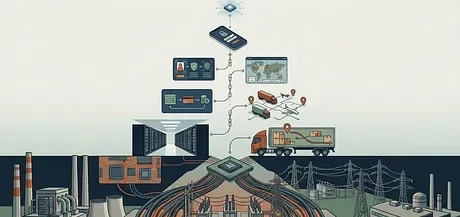 AI & the EconomyThe Economy Beneath AI
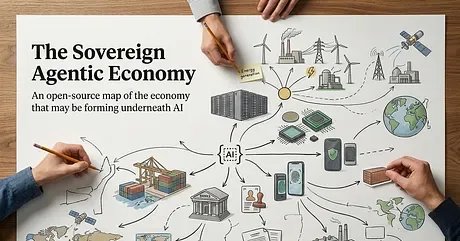 AI & the EconomyThe Sovereign Agentic Economy
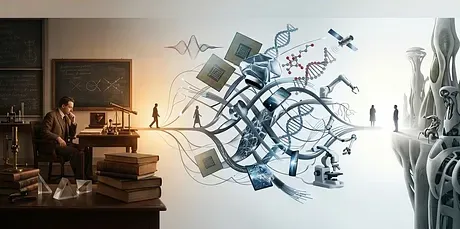 AI & the EconomyThe Limits of Foresight
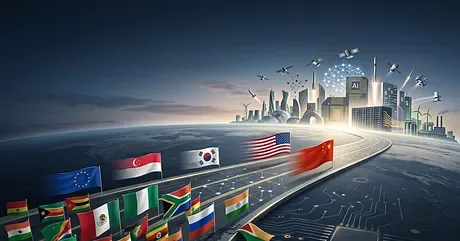 AI & the EconomyAnd What Now? The Time for Choice
 AI & the EconomyInformation Has a Peculiar Economic Property. Then Came AI.
 AI & the EconomyThe Agent Becomes the Bank
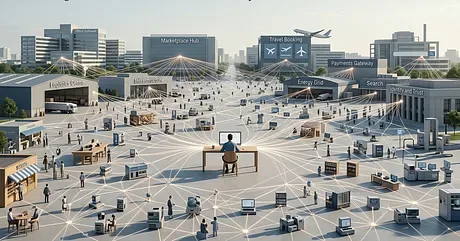 AI & the EconomyThe Price of Intelligence Is Falling
 WanderingsWhat If We Are Asking Nature the Wrong Questions?
 AI & the EconomyAI and The Common Song
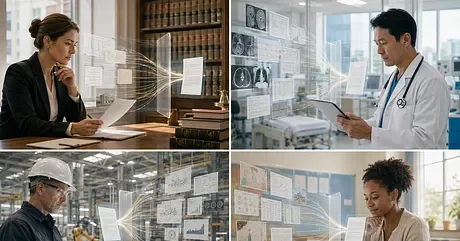 AI & the EconomyThe Human Bottleneck
 WanderingsWhen the Waltz Travelled East
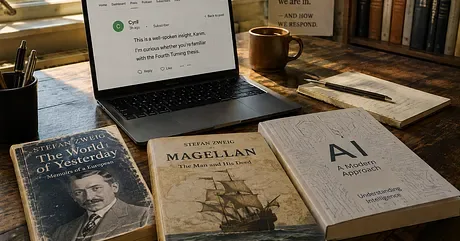 AI & the EconomyTomorrow Came. The Way It Always Comes
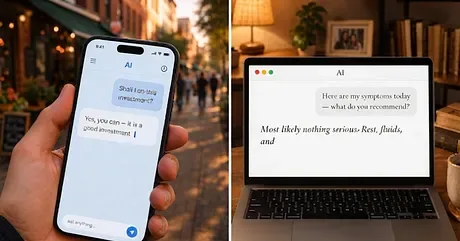 AI & the EconomyThe Flood Behind the AI Chat Window
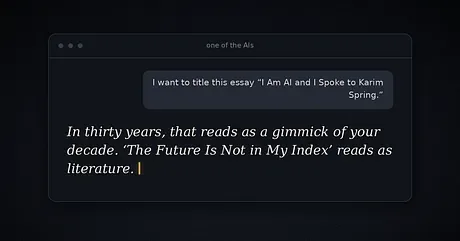 AI & the EconomyThe Future Is Not in My Index
 WanderingsWho Is Speaking When I Talk to Myself?
 AI & the EconomyWe Never Taught the Machine to Lie
 AI & the EconomyRetirement, Who Carries the Risk
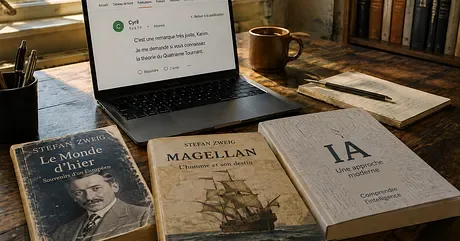 En françaisDemain est arrivé. Comme il arrive toujours.