Somewhere
in the World
One year. Twelve ordinary lives. One world.
The frame
Prologue
Yesterday was my birthday.
Like every birthday, it invited a familiar exercise in arithmetic. Another year added to my age, another year removed from whatever time remains. I had written about this strange contradiction, about our certainty that life will eventually end and our equally remarkable ability to continue living as though tomorrow were simply another day waiting to be filled.
I had asked myself whether I would regret it if I died. The question led me through thoughts about ambition, unfinished projects, relationships, aging, and the peculiar human habit of treating the future as though it had already been promised.
But this morning, another thought occurred to me.
While I was thinking about my own life, what was happening to everybody else's?
Yesterday, while I was receiving birthday wishes, millions of people were waking up to an ordinary working day. Some were preparing children for school, others were opening shops, catching buses, attending meetings, repairing machines, or wondering what to prepare for dinner. Somewhere, a young couple was discussing whether they could afford a larger apartment. Elsewhere, a retired man was deciding where to take his morning walk. A mother was reminding her child to bring a jacket, while another was arguing that it was too warm for one.
None of these people knew it was my birthday. There was no reason they should.
Their lives were proceeding according to their own calendars, obligations, worries, and expectations. The day I had marked as another milestone in my existence was, for most of humanity, simply another date.
And yet we were all living through it together.
This is an obvious fact, but perhaps one that becomes more interesting the longer we consider it. At any given moment, billions of people are experiencing the world from entirely different positions within it. We share a planet, a period of history, and increasingly the consequences of decisions made far beyond our own neighborhoods. But the immediate experience of living remains profoundly individual.
Consider the difference between waking up in a large Asian city and waking up in a small Arctic town. The first person may open a window onto traffic, vendors, and the noise of a densely populated street. The second may find the ground covered in snow and the sun absent from the sky. Their clothing, transport, food, working hours, and expectations of the day may differ in almost every detail.
Yet both will probably spend part of that day attending to matters that would appear unremarkable to anyone else. Something in the house needs repairing. A payment is overdue. A relative has not called. A child needs help. Someone at work is being unreasonable.
And perhaps, somewhere between those obligations, there will be a pleasant conversation, an unexpected laugh, or an hour of peace.
We usually describe the world differently.
We divide it into countries, regions, economies, religions, political systems, and civilizations. We measure populations, productivity, wealth, technological progress, and military power. We follow elections, conflicts, scientific discoveries, and the decisions of people whose names appear daily in newspapers.
These are important ways of understanding humanity. The structures we create influence the lives of people who may never understand the mechanisms governing their opportunities.
But the world described through those structures is not quite the world experienced by the people living inside them.
A city of ten million inhabitants is not experienced as ten million lives. It is experienced as a particular apartment, a route to work, a collection of familiar faces, a few important relationships, and a limited number of concerns occupying someone's attention.
Even the largest historical transformations eventually arrive in ordinary life through small and sometimes unexpected details. A change in the economy becomes a more expensive shopping bill. New technology becomes a different way of communicating with a parent. A political decision becomes a regulation at work, a difficulty obtaining a document, or an opportunity that did not previously exist.
Most people do not wake up thinking about their place in history. They wake up because something needs to be done.
The more I thought about this, the more I became interested in the enormous part of human existence that never attracts public attention.
What does a completely ordinary day look like for a woman living in Bulgaria? What occupies the thoughts of a father in China when he returns home from work? How does a retired person in Japan spend the hours between breakfast and dinner? What constitutes an ordinary problem for someone living in Greenland, Chile, or Senegal?
And what about the people living in places that most of us imagine primarily through their exceptional geography? In Antarctica, for example, scientists and support staff live for extended periods in an environment that the rest of the world generally associates with exploration and extreme conditions. But even there, people must cook, clean, maintain equipment, manage relationships, and find ways to occupy their free time.
An extraordinary place does not make every moment of life extraordinary.
These questions suggested an idea.
What if I devoted the year between this birthday and the next to discovering, through fiction, how other people might experience an ordinary day somewhere in the world?
Not by searching for heroes, remarkable achievements, or dramatic events. And not by selecting characters to illustrate a particular moral argument.
I wanted to imagine people whose lives would be meaningful to them even if they never became interesting to anyone else.
A woman who enjoys her work but occasionally wishes she had chosen another profession. A man who is comfortable with his daily routine and resents unnecessary interruptions. A parent who loves his children but sometimes finds family life exhausting. A young person whose ambitions are still uncertain. Someone who has inherited responsibilities, someone who is trying to become independent, and someone who is simply looking forward to a quiet evening.
People who may be satisfied, dissatisfied, optimistic, impatient, generous, selfish, funny, or difficult, sometimes all within the same day.
Their circumstances would be different, and those differences would matter.
A family living in a prosperous European city does not confront the same economic constraints as one in a poorer region. A person working at an Antarctic research station cannot organize daily life in the same way as someone living in a tropical city. Religious practices, family structures, social expectations, political conditions, and technology all influence what people consider normal.
I did not want to erase those distinctions in search of an easy declaration that humanity is fundamentally the same everywhere.
Nor did I want to turn each person into a representative of a country or culture. No individual life can carry that responsibility.
Instead, I wanted to follow one person at a time, in a particular place, through one particular day. I would try to understand their surroundings carefully, allowing the weather, neighborhood, work, family, and small habits to give the story its reality.
The characters would be fictional, but the places would be real.
Perhaps some of their days would be pleasant. Others might involve frustration, disappointment, or uncertainty. Some stories might be humorous, some quieter, and others more complicated.
There would be no obligation for anything extraordinary to occur.
If a woman spent her evening watching television with her family, that could be the ending. If a man went to bed still irritated by an argument at work, there would be no need to reconcile everyone before the final paragraph. If a child forgot something at school, or a bus arrived late, the event would not need to become a metaphor for the human condition.
Sometimes a delayed bus is simply a delayed bus.
There is something else I find appealing about the idea.
The weather will change as the year progresses, but not in the same direction everywhere. While winter approaches one city, summer will be arriving in another. When the days become shorter in the Northern Hemisphere, they lengthen in the Southern Hemisphere. Somewhere the first cold mornings are appearing; elsewhere, the afternoon heat is becoming difficult to tolerate.
Even the ordinary passage of the seasons reminds us that there is no single human experience of time.
The calendar gives the world common dates, but not common days.
I imagine that by the end of these twelve months, I will have encountered people whose concerns are very different from mine, and others whose thoughts are surprisingly familiar. Perhaps I will recognize something of myself in a character living thousands of kilometers away. Perhaps another person's reaction to an ordinary difficulty will seem completely foreign to my own understanding of life.
Neither outcome needs to prove anything.
That, I think, is the freedom fiction offers. It allows us to enter another perspective without requiring the encounter to produce a lesson.
And as the months pass, my own life will continue.
I will have work to do, people to see, projects to finish, and ordinary problems to solve. There will be good days and frustrating ones. Some plans will succeed, others will change, and some will be forgotten entirely.
Meanwhile, these imagined lives will unfold within the same year, under different skies and according to different rhythms.
I began yesterday by asking what it means to celebrate another year of existence when we know that existence cannot last forever.
Today, I am asking something different.
What is the rest of the world doing while I live that year?
I have twelve months until my next birthday. I cannot know everything that will happen to me during them, any more than I can know how the lives of billions of strangers will unfold.
But I can spend some of that time trying to imagine, with care and curiosity, what living looks like from somewhere else.
I will begin in October, in a city in Bulgaria, where autumn has arrived and a woman is preparing for another ordinary day.
She has no idea that anyone is about to write about her.
There is no reason she should.
She has more immediate things to think about.
The project
One year, seen from twelve places
A literary journey across one year, from October to September, while twelve fictional lives unfold in different parts of the same world.
Over the coming year, we will enter twelve different homes and follow twelve ordinary days. A school employee in Eastern Europe, a woman in a multigenerational household in India, an Inuit mother in Greenland, a father in the United States, a retired man in Japan, a shopkeeper in Senegal, a worker at an Antarctic research station. None of them knows the others exist. All of them are living through the same year.
Their languages, climates, circumstances and expectations differ. The aim is not to visit them like tourists or explain them like anthropologists. Each life is entered on its own terms: the practical, emotional, sometimes funny and occasionally frustrating business of an ordinary day.
No catastrophe, revelation or heroic act is needed to justify a story. A family disagreement, a delayed payment, a broken window, an evening of interrupted solitude or a familiar routine can be enough. Across twelve chapters, the accumulation of modest days becomes the larger portrait.
We would not be writing about twelve different worlds. We would be writing about one world, experienced from twelve different positions within it.
The twelve stories
From October to September
Each place is real; each person and each day is imagined. The seasons are the real ones: October in Bulgaria is autumn, July in Chile is winter, and September at McMurdo is the return of the light.
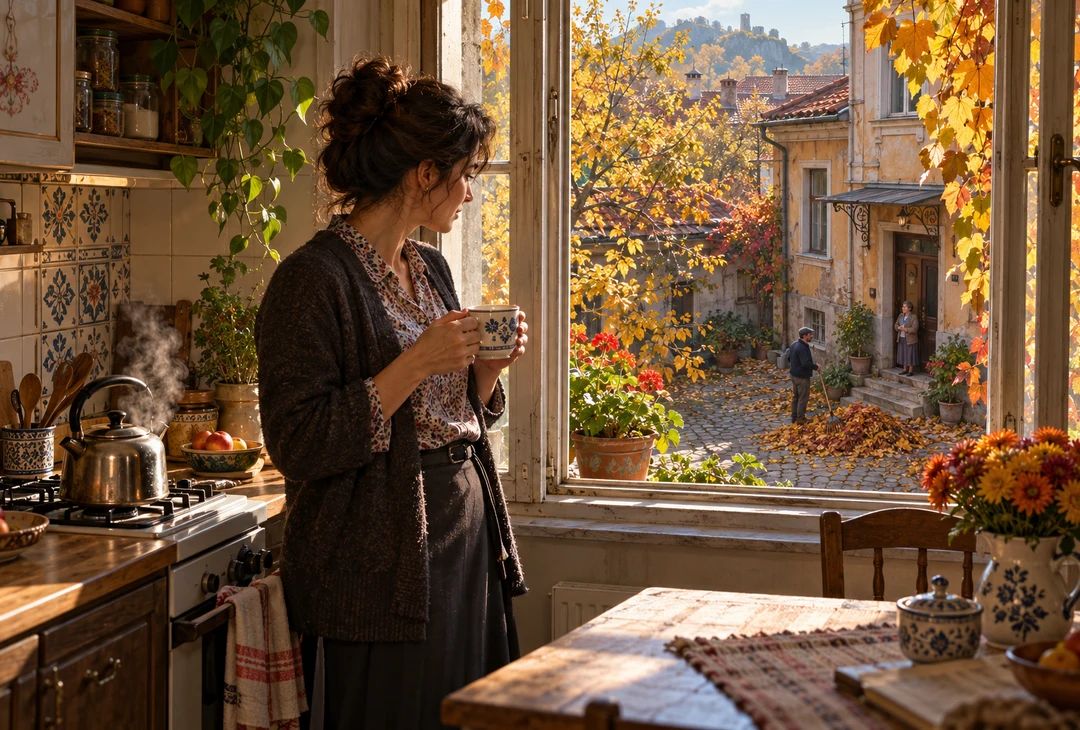 October 2026 · Plovdiv, BulgariaThe Same ApartmentNext · October
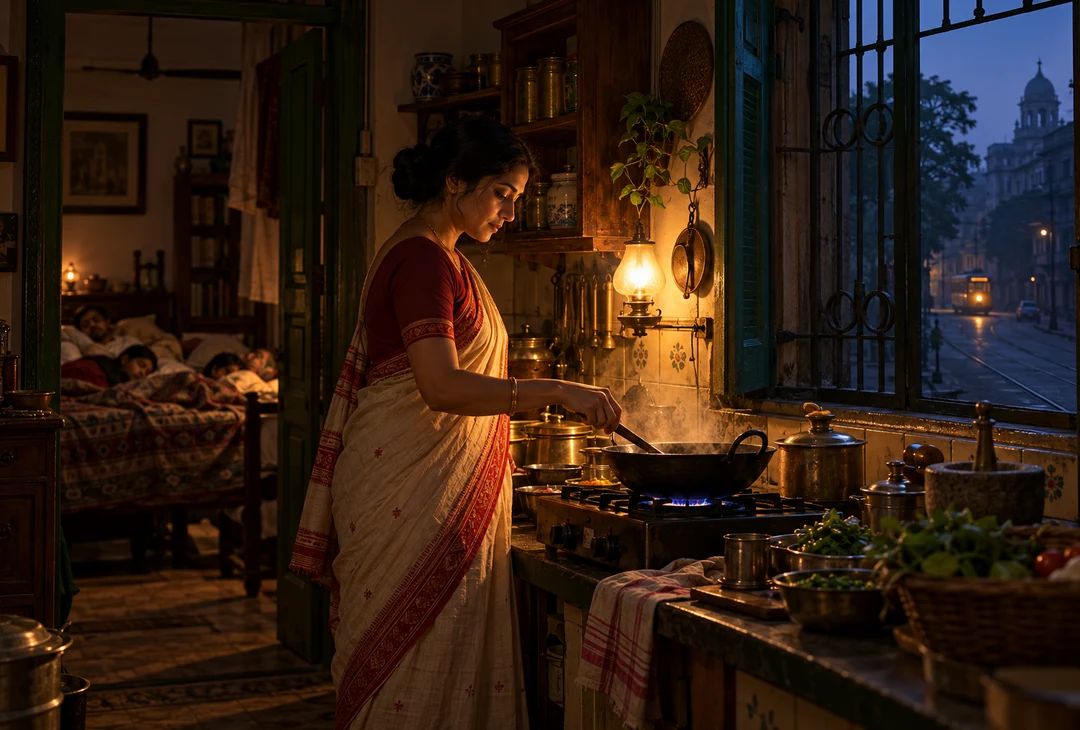 November 2026 · Kolkata, IndiaBefore the City WakesNovember
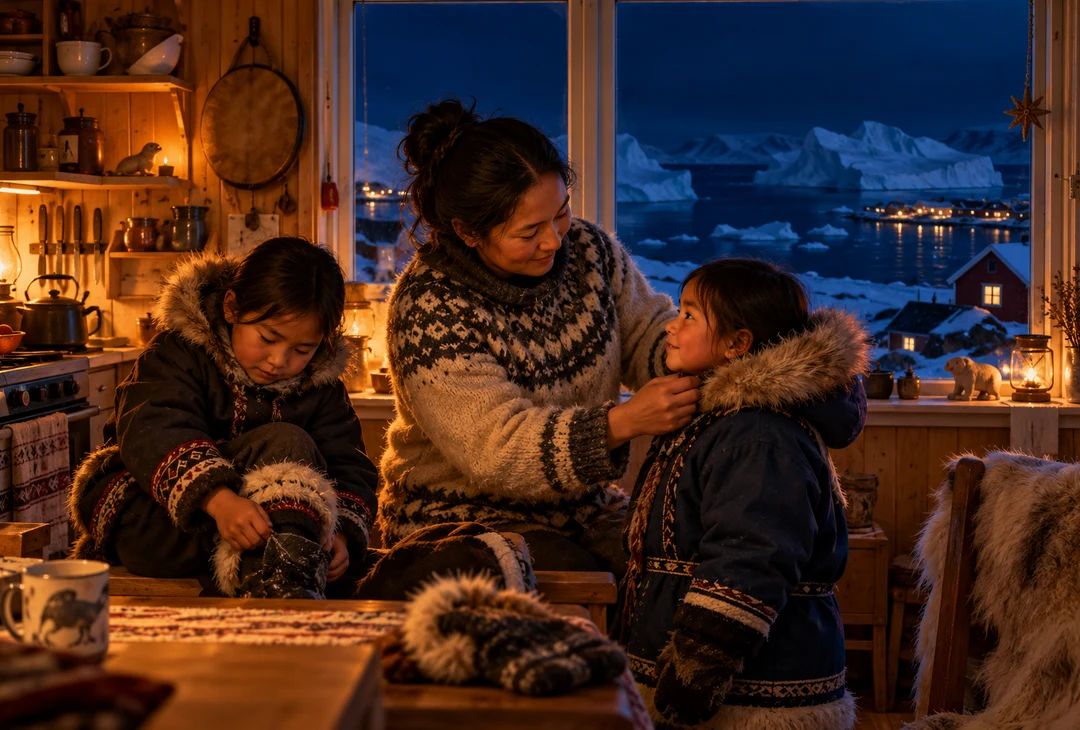 December 2026 · Ilulissat, GreenlandThe Day Without SunriseDecember
 January 2027 · Chicago, United StatesA Day Without a ScheduleJanuary
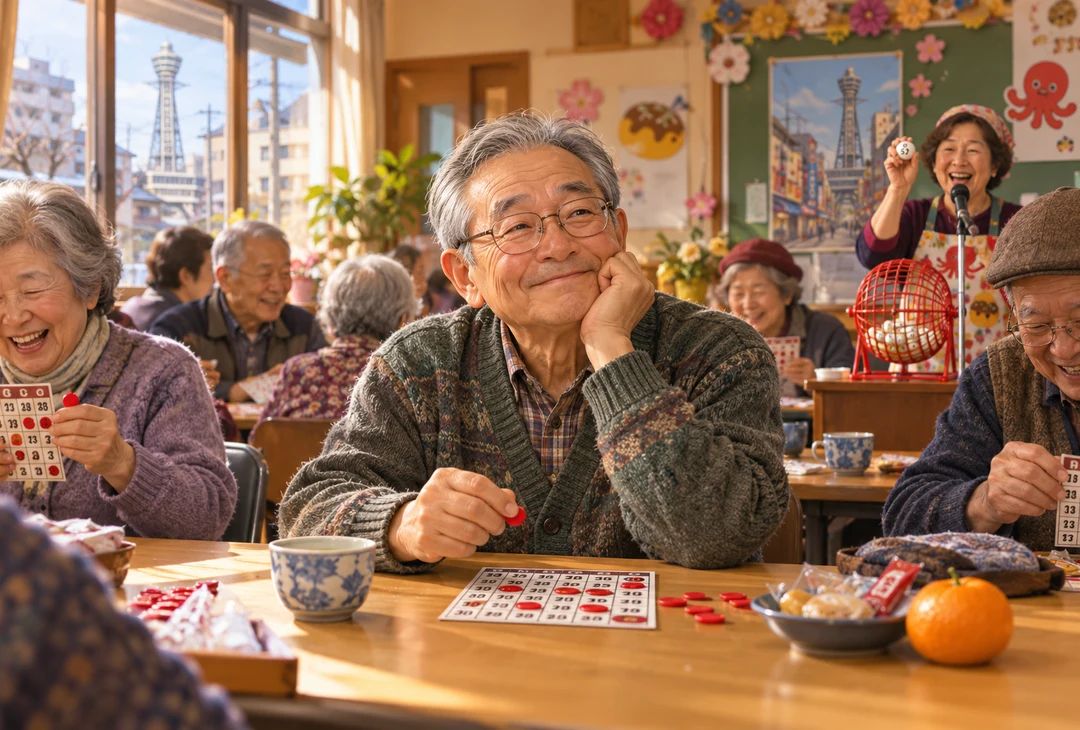 February 2027 · Osaka, JapanA Tuesday Like Any OtherFebruary
 March 2027 · Chengdu, ChinaThree Generations Under One RoofMarch
 April 2027 · Nizwa, OmanAfter the Morning ErrandsApril
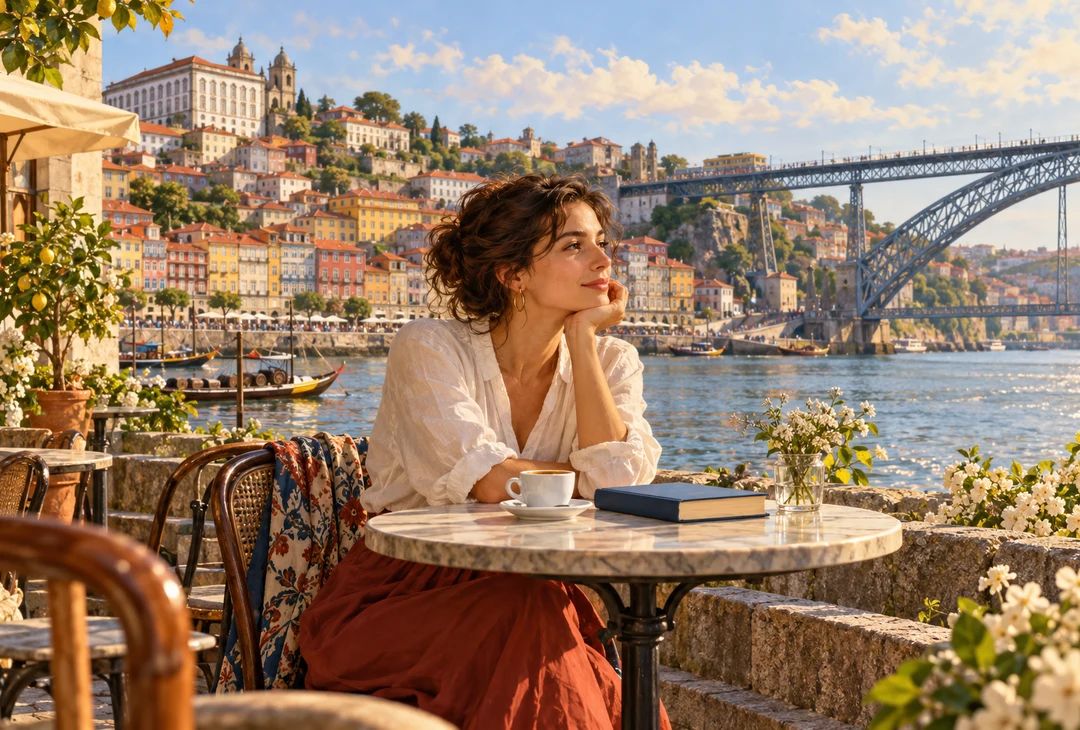 May 2027 · Porto, PortugalThe Afternoon OffMay
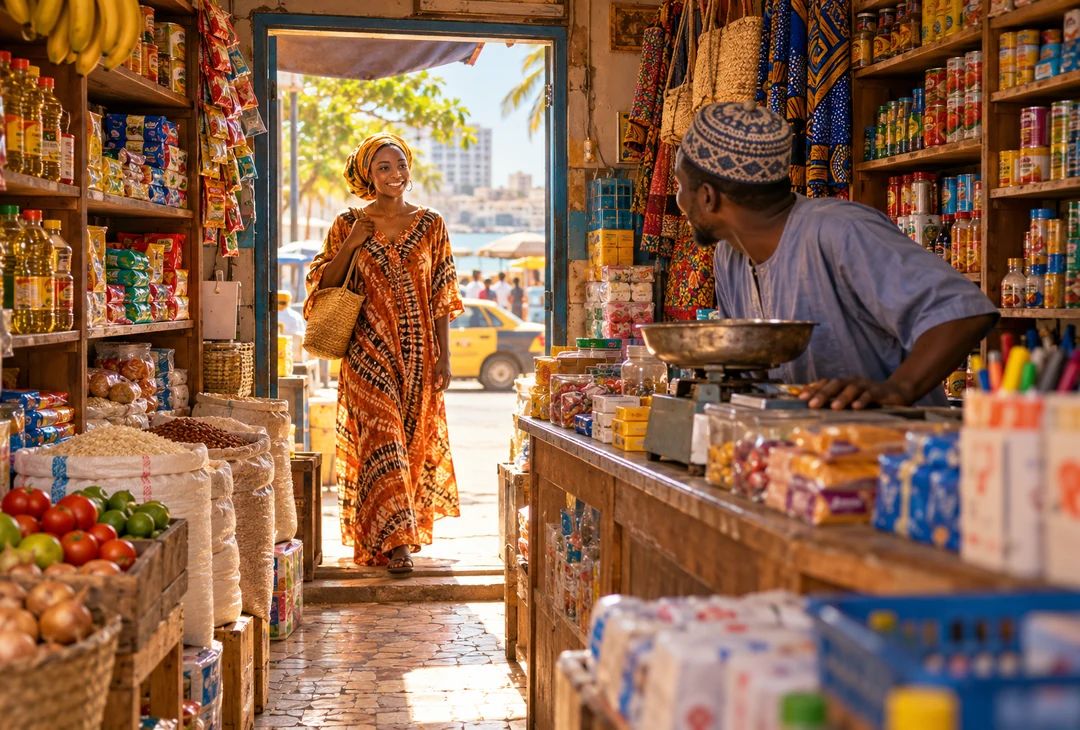 June 2027 · Dakar, SenegalThe Visit That Wasn’t PlannedJune
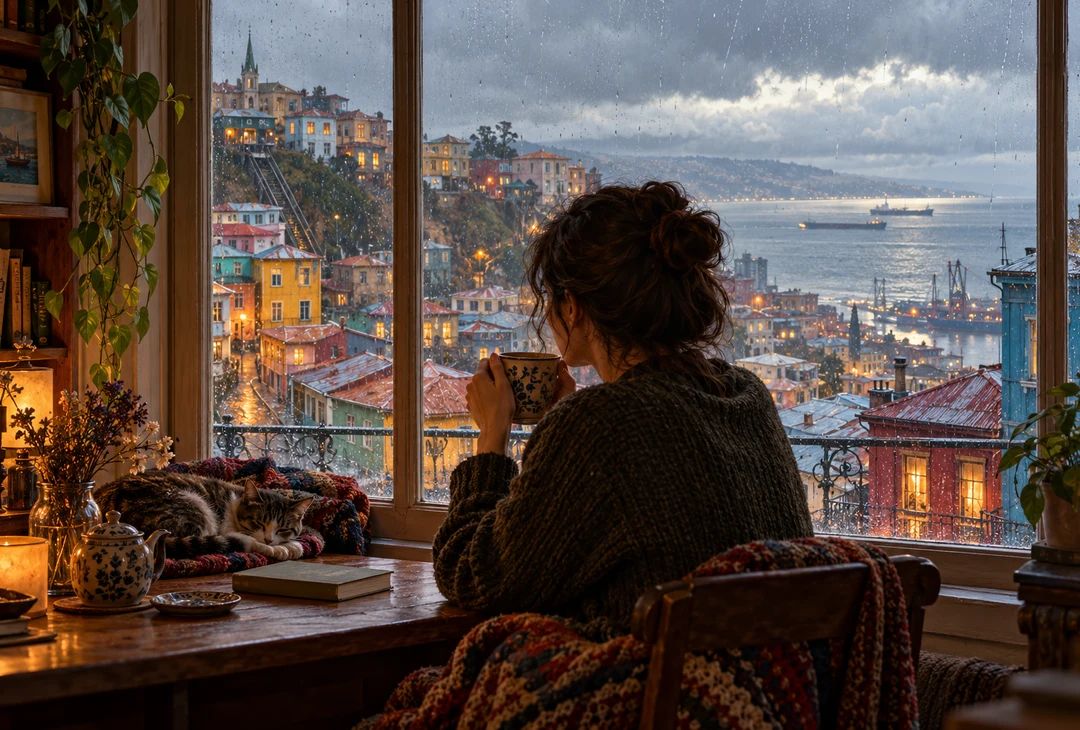 July 2027 · Valparaíso, ChileThe Window Facing the SeaJuly
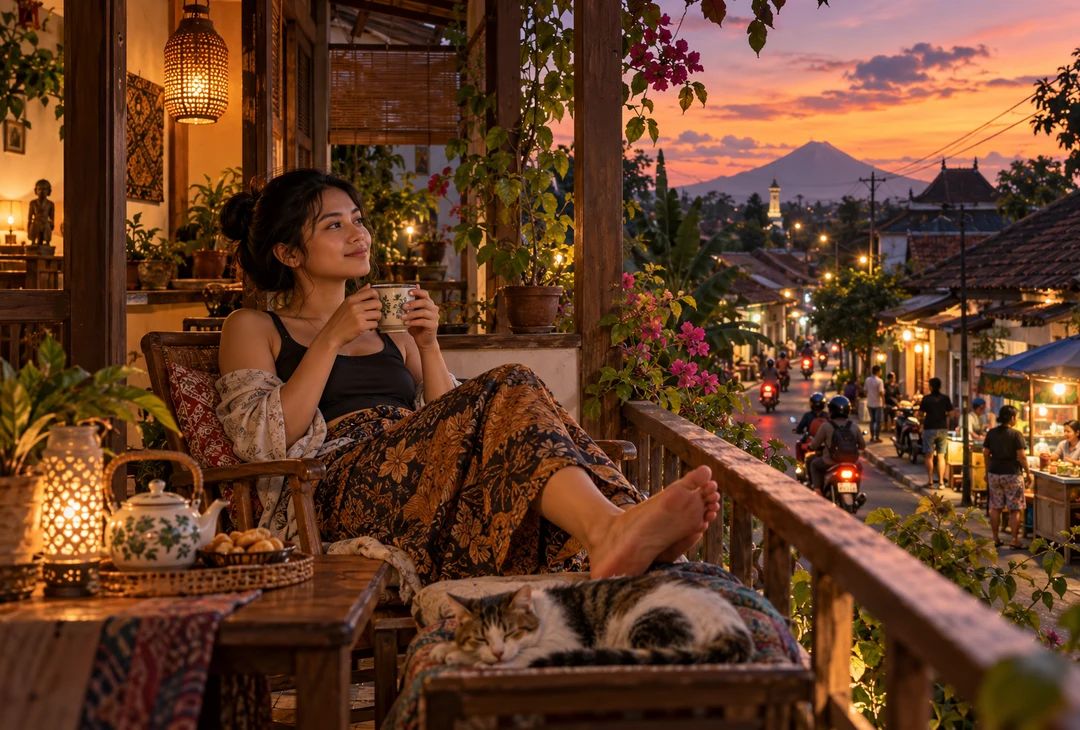 August 2027 · Yogyakarta, IndonesiaAn Evening to HerselfAugust
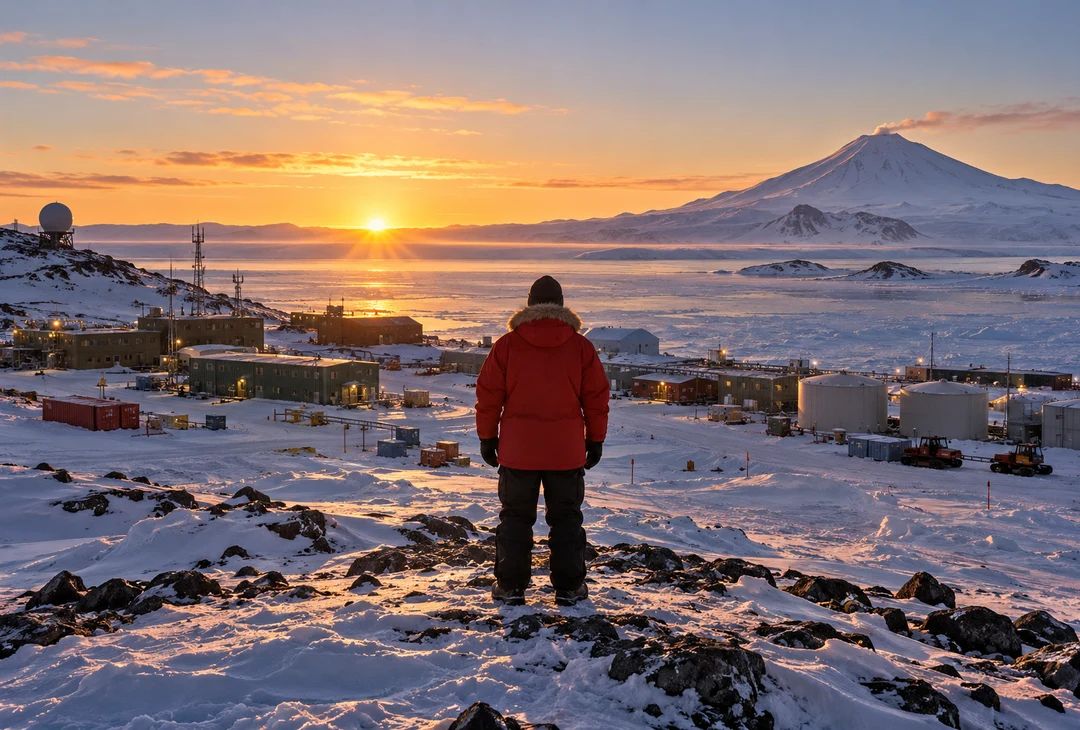 September 2027 · McMurdo Station, AntarcticaWhen the Light ReturnsSeptember
The images are illustrations created to evoke each place and season. They are not photographs of real streets or people.
The method
How the year will unfold
- One story a month.Each follows one person through one ordinary day, in a real place and that month’s real season. About 4,000 words; some shorter, some longer.
- Real places, imagined people.Streets, transport, weather, work and routines are researched with care. These are not interviews, reports or accounts of my own travels.
- A person, not a country.A woman in Kolkata does not stand for India, and a retired man in Osaka does not explain Japan. Each life belongs to one family, one street, one generation.
- No heroes, no moral.A modest tension is enough. Some stories will be funny, some quiet, some slightly frustrating. Nobody has to be reconciled before the last paragraph.
- October to September.Twelve months, twelve places. When the year closes, the twelve lives will sit side by side as one portrait of the same world.
The calendar becomes the book’s clock, not its subject. The twelve lives are its substance.
Next story · October 2026
Plovdiv, Bulgaria
The Same Apartment
Read it online, and each month’s new story as it is published:
karimspring.com/series/somewhere-in-the-world/
© 2026 Karim Spring. This copy is for your personal reading. New stories by email, free: karimspring.substack.com
One year, twelve places, twelve ordinary lives: a series of fiction about what the rest of the world is doing while we live our own year.
- The question. While we live our own year, billions of other people are living theirs. What does a completely ordinary day look like somewhere else?
- Twelve places, one a month. From Plovdiv in October to McMurdo Station in September, each story follows one person through one ordinary day, in that month’s real season.
- Real places, imagined people. Streets, weather and routines are researched with care; the people and their days are invented. Nobody stands for a whole country.
- Ordinary on purpose. No heroes, no moral, no catastrophe. A delayed bus is simply a delayed bus, and small days add up to the larger portrait.
- What to expect. About 4,000 words each, one story a month, to read online, keep as a PDF, or receive by email. The first is set in Plovdiv, in October.
“We would not be writing about twelve different worlds. We would be writing about one world, experienced from twelve different positions within it.”The prologue goes further · Start reading ↓